Mount Everest has long stood as a symbol of endurance and possibility.
For years, the goal was straightforward: reach the summit and return safely. How fast you did it was rarely part of the conversation.
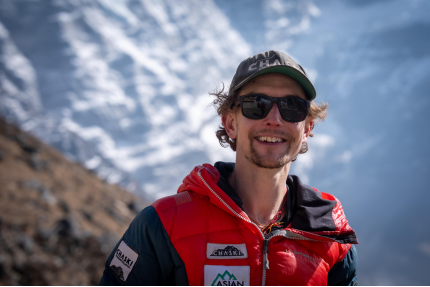
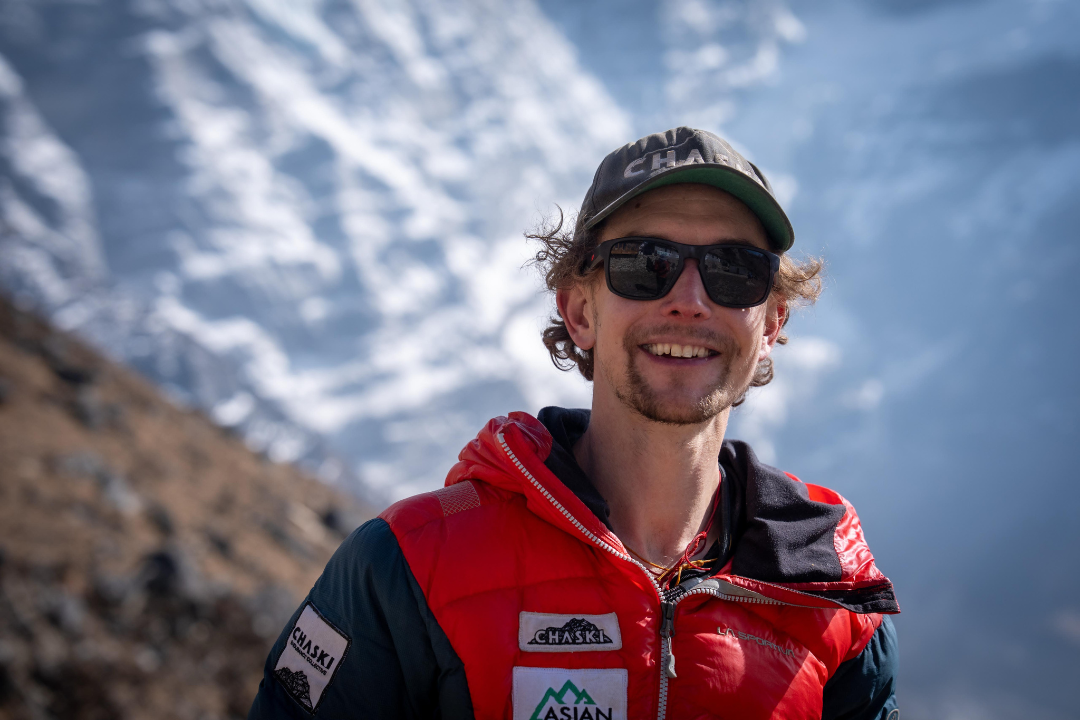
That perspective is starting to evolve. This week, Tyler Andrews helped push that shift forward.
Tyler Andrews is not a traditional mountaineer.
He comes from a background in endurance sport. He started as a competitive runner, competing in marathons and ultramarathons before moving into the mountains.
Over time, that shift became his edge. That approach has led to results across the world.
Andrews has set speed records on major peaks, including Kilimanjaro, Aconcagua, and Manaslu, building a reputation as one of the top high-altitude endurance athletes in the world.
But Everest was always different.

For Andrews, Everest was not about finishing. It was about time.
He set out to break one of endurance racing’s most iconic benchmarks: the fastest ascent from base camp to summit. A record that had stood for more than two decades.
Earlier in the month, he attempted the climb without supplemental oxygen. That attempt ended short of the summit.
At extreme altitude, your biggest limitation is not strength, it’s oxygen.
As elevation increases, oxygen availability drops. The body is forced to operate at a fraction of its normal capacity. Small inefficiencies become critical.
This is where preparation matters. In the lead-up to Everest, Andrews visited Human Powered Health Wellesley to refine his approach through targeted testing and analysis.
The goal was simple:
Through performance testing such as VO2 max, Lactate Threshold, and Running Gait Analysis, he built a clear picture of how his body performs. With expert guidance from Human Powered Health performance physiologists, he then adjusted his movement patterns, refined his strategy, and aligned his training with the demands of high-altitude climbing.
Because at that level, guesswork doesn’t hold up, and even a 1% improvement can be the difference in a record-breaking performance or a failed attempt.

On May 27th, 2026, Andrews left Everest Base Camp and began his ascent.
Just under 10 hours later, he reached the summit. His final time? 9 hours and 55 minutes.
That performance broke the previous record of 10 hours and 56 minutes, which had stood since 2003.
He completed it in conditions that challenge even the most experienced climbers:

What Andrews demonstrated is something much broader:
Performance at the highest level is no longer driven by effort alone.
It is driven by understanding. Understanding:
That applies whether you are climbing Everest or training for your first race. We congratulate Ty on his successful attempt and for showing us what is possible when you train based on your unique datapoints backed by expert guidance along the way.
Whatever your goals may be, we’re here to support you on your journey towards True Health.
Watch Tyler Andrew’s Pre-Attempt Interview:
Human Powered Health is staffed with Master's and PhD-level performance physiologists who are dedicated to helping you improve your health and performance. Our product is a healthier you, and we have the science to make you better than ever.
Human Powered Health uses high-precision, research-grade technology for all assessments in order to provide a superior level of service and quality for anyone who wants to learn more about their health and performance metrics.
We are on a mission to power health and athletic performance for motivated humans. Your body belongs to you. You deserve accurate information about it. We give everyone the data and expertise to fine-tune their own health and athletic performance. Because knowledge is power, and true health is self-made.