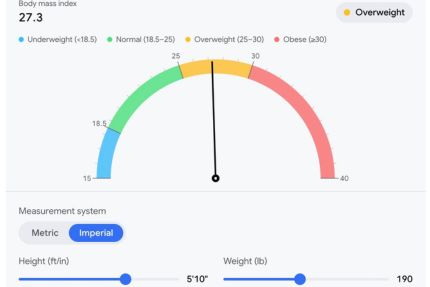
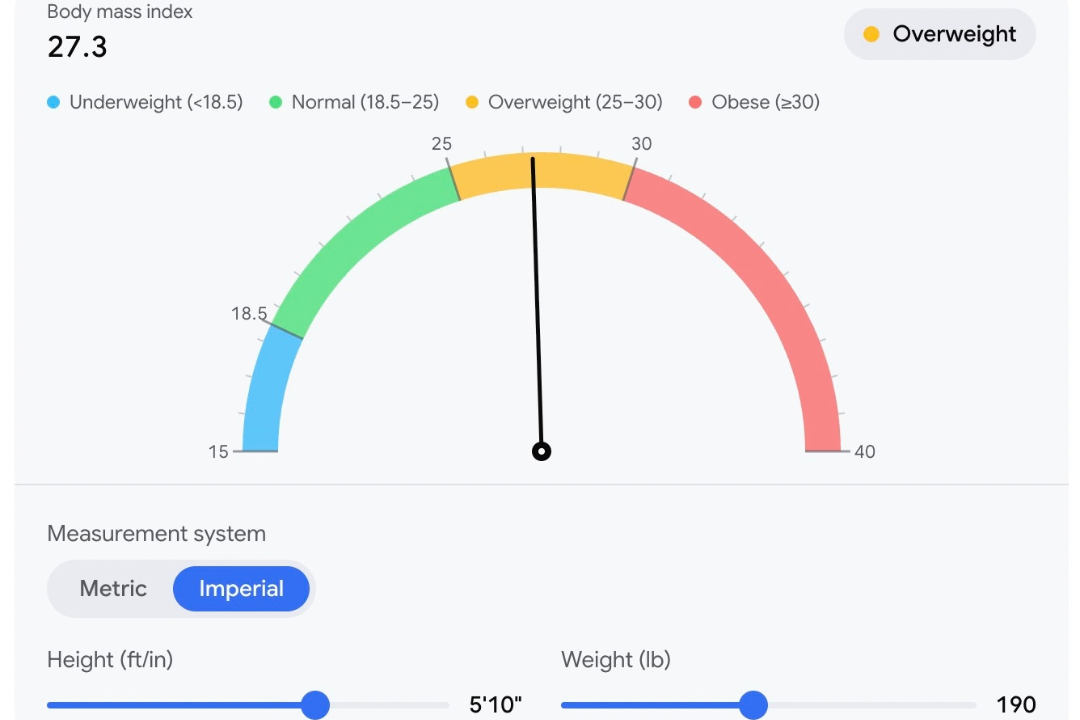
Two people wanted to compare their body composition against the population. They have the same height, the same weight, and the same BMI. One carries most of that weight as muscle. The other carries more of it as fat, some of it stored deep around the organs. On paper, they look identical. On a DXA scan, they look like two different people.
That gap between what a formula estimates and what the body is actually made of is why body composition measurement has evolved. It helps to understand what each tool can and can’t tell you.
Body mass index (BMI) is a calculation based on two numbers: height and weight. Divide a person’s weight in kilograms by their height in meters squared, and the result places them into one of four categories:
For example, someone who is 5’10” and weighs 180 pounds has a BMI of about 25.8. That puts them in the “overweight” category, whether that weight comes from muscle or fat.
BMI dates back to the 1830s. Belgian mathematician Adolphe Quetelet developed it to describe average body size across large groups of people. It was designed as a population statistic, and over time it was adopted in clinical settings as a quick screening tool.
It still has real strengths; BMI is fast and free, and it requires nothing more than a scale and a height measurement. It’s consistent, easy to track, and useful for spotting broad trends across large groups. As a first-pass check, it gives a practitioner a reasonable starting point.
The limitation is built into the formula. BMI treats every pound the same, whether it comes from muscle, fat, bone, or water. That creates a few blind spots:
For anyone who works with active, strength-focused person, that first blind spot comes up often.
A study published in Nutrients in 2025 put BMI to the test. Researchers at the University of Verona measured body fat in 1,351 adults, ages 18 to 98, using DXA. They then compared those results with each person’s BMI category.
The standout finding: more than half (53.4%) of the people BMI classified as overweight were misclassified. Most of them actually had body fat levels in the normal range. BMI flagged them as overweight when their body composition said otherwise.
The researchers summarized the broader picture this way: “Despite the fact that the BMI seems to be reliable in determining body weight status in the normal weight range, over a third of the general population was misclassified.”
DXA stands for dual-energy X-ray absorptiometry. It was first developed to measure bone density, and it has since become one of the most accurate and widely used tools for measuring body composition.
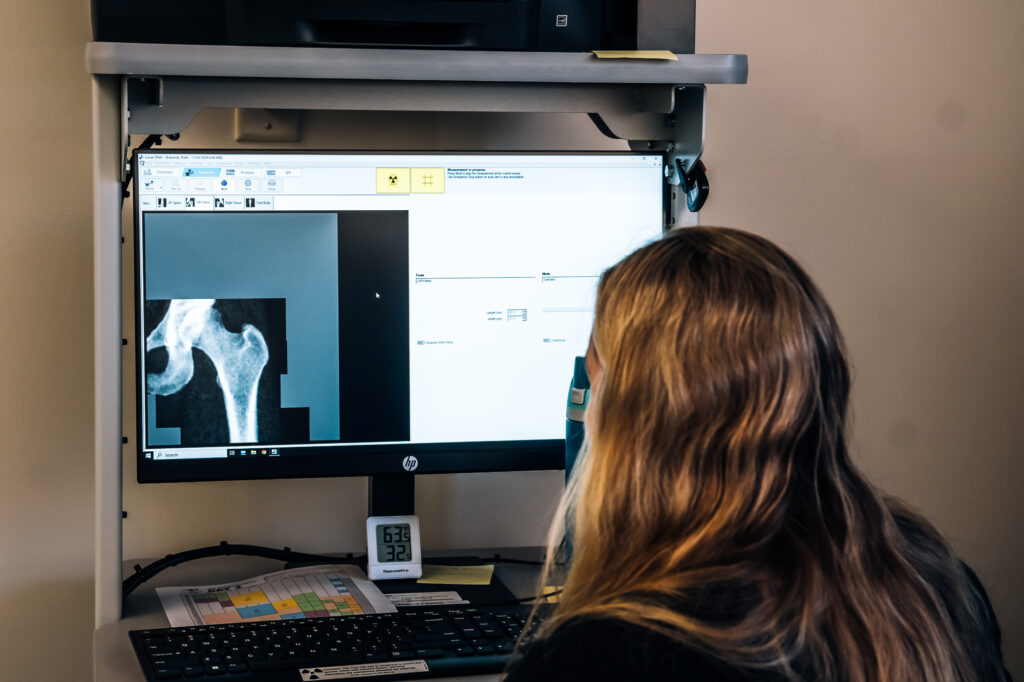
The scan itself is simple. The client lies on a padded table for a few minutes while a scanner arm passes over the body. The scanner uses two very low-dose X-ray beams. Bone, fat, and muscle each absorb those beams differently, so the scan can tell them apart and map where each one sits.
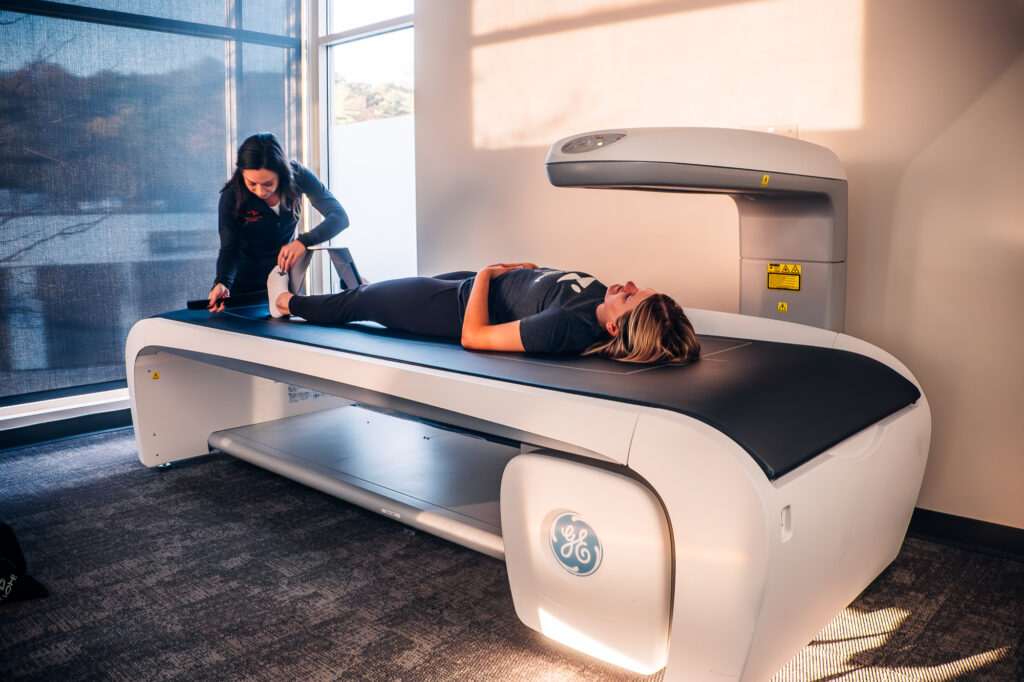
Where BMI produces one number, DXA breaks that number into its parts:
BMI still has a place as a quick check. DXA adds the detail behind that number, giving you and your client more insight to guide programming decisions. Retested every six to twelve months, it also turns a single snapshot into a trend you can track.
The study’s authors reached a similar conclusion: “Healthcare practitioners should be advised not to rely solely on the BMI, and should integrate its use with adiposity measures (i.e., BF%) or alternative surrogate indicators (i.e., waist-based) in routine evaluations, especially in those with a BMI below or above 18.5 kg/m2 or 25 kg/m2.”
As our understanding of health evolves, so do the tools we use to measure it. BMI and DXA are a clear example. BMI gave us a simple way to describe populations, and DXA shows what an individual body is actually made of. When screening evolves, the insight behind every coaching decision sharpens, and that supports better outcomes for the people you work with.
Watch one of our master’s-level physiologists explain what a full DXA scan covers, from total and segmental body composition to visceral fat and muscular symmetry: Here
The best way to understand what DXA adds is to experience it yourself. Connect with Human Powered Health for more info on our best-in-class DXA scan process and protocol. It’s a great first step if you want to offer proactive health assessments that are actually built around what’s happening in the body.
Human Powered Health is staffed with Master's and PhD-level performance physiologists who are dedicated to helping you improve your health and performance. Our product is a healthier you, and we have the science to make you better than ever.
Human Powered Health uses high-precision, research-grade technology for all assessments in order to provide a superior level of service and quality for anyone who wants to learn more about their health and performance metrics.
We are on a mission to power health and athletic performance for motivated humans. Your body belongs to you. You deserve accurate information about it. We give everyone the data and expertise to fine-tune their own health and athletic performance. Because knowledge is power, and true health is self-made.